
Smart Locker Systems Planning for Hybrid Workplaces
Your workforce may not be in the building five days a week anymore. Desks sit empty midweek, shared areas get crowded on peak days, and personal items end up everywhere because no one has a predictable place to put them. This is the hybrid storage problem, and it is reshaping how facilities teams think about lockers. The old model assumed everyone had a dedicated desk and a dedicated locker. In a hybrid environment, that logic breaks fast. Smart locker systems solve a simple problem: provide secure, accessible personal storage that matches how people actually use the building now.
Why the old locker model fails in hybrid environments
Assigned lockers made sense when occupancy was consistent. Now, assigning one locker per employee often creates two outcomes at once: unused storage capacity and frustrated users on busy days.
Hybrid work changes what lockers are for. Lockers are no longer desk-adjacent storage. They are storage at transition points, where people enter, move, collaborate, and leave. That is exactly where smart locker systems perform best.
 Smart locker systems start with usage, not headcount
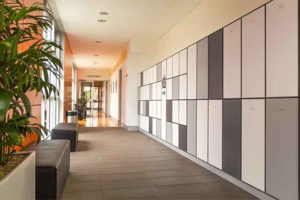 Smart locker systems start with usage, not headcount
The most important question is not “How many people do we employ?” It is “How many people are here at the same time, and what do they need to store?”
Peak usage matters more than total population. If you have 100 employees but only 60 are onsite on a typical peak day, you generally do not need 100 lockers. You need locker capacity sized to peak simultaneous occupancy, plus a small buffer. This is the core math behind smart locker systems planning.
A practical baseline:
- Calculate peak onsite occupancy by day and time window
- Size lockers to that peak
- Add a modest buffer so the system stays usable during spikes
Choose smart locker systems based on what people store, and for how long
Hybrid workplaces rarely need one locker type. They usually need a mix.
Start by separating “day use” from “all day” and “team use”:
- Day-use cubbies for laptop bags, coats, and small personal items
- Larger lockers for full-shift users or anyone storing bulkier gear
- Team lockers for shared supplies and collaborative materials
This is one of the biggest advantages of smart locker systems. You can right-size the compartments to how people actually use them, rather than forcing every user into the same storage footprint.
Layout matters more than you think
Smart lockers only work if they are placed where people naturally move.
In hybrid offices, smart locker systems tend to perform best when they are organized into three zones:
- Entry zone lockers near reception or building entry for high-turnover personal storage
- Team area lockers near collaboration spaces for shared materials
- Focus area lockers that support hot-desking and movement between quiet zones and meeting zones
This approach reduces congestion and eliminates the common mistake of putting lockers in a corner that no one wants to walk to twice a day.
Security and accountability are not optional in shared storage
When lockers are shared or communal, security is not only about locking a door. It is also about accountability.
Digital access logs beat key counts because they support auditability. Knowing who accessed what and when is not paranoia. It is operational clarity, especially when something goes missing. This is a key reason facilities teams adopt smart locker systems instead of traditional keyed lockers.
Smart locker planning should address:
- Who needs access and when
- Whether lockers are assigned, shared, or day-use
- How access is granted and removed over time
- How activity is tracked in a shared environment
Accessibility and daily usability make or break adoption
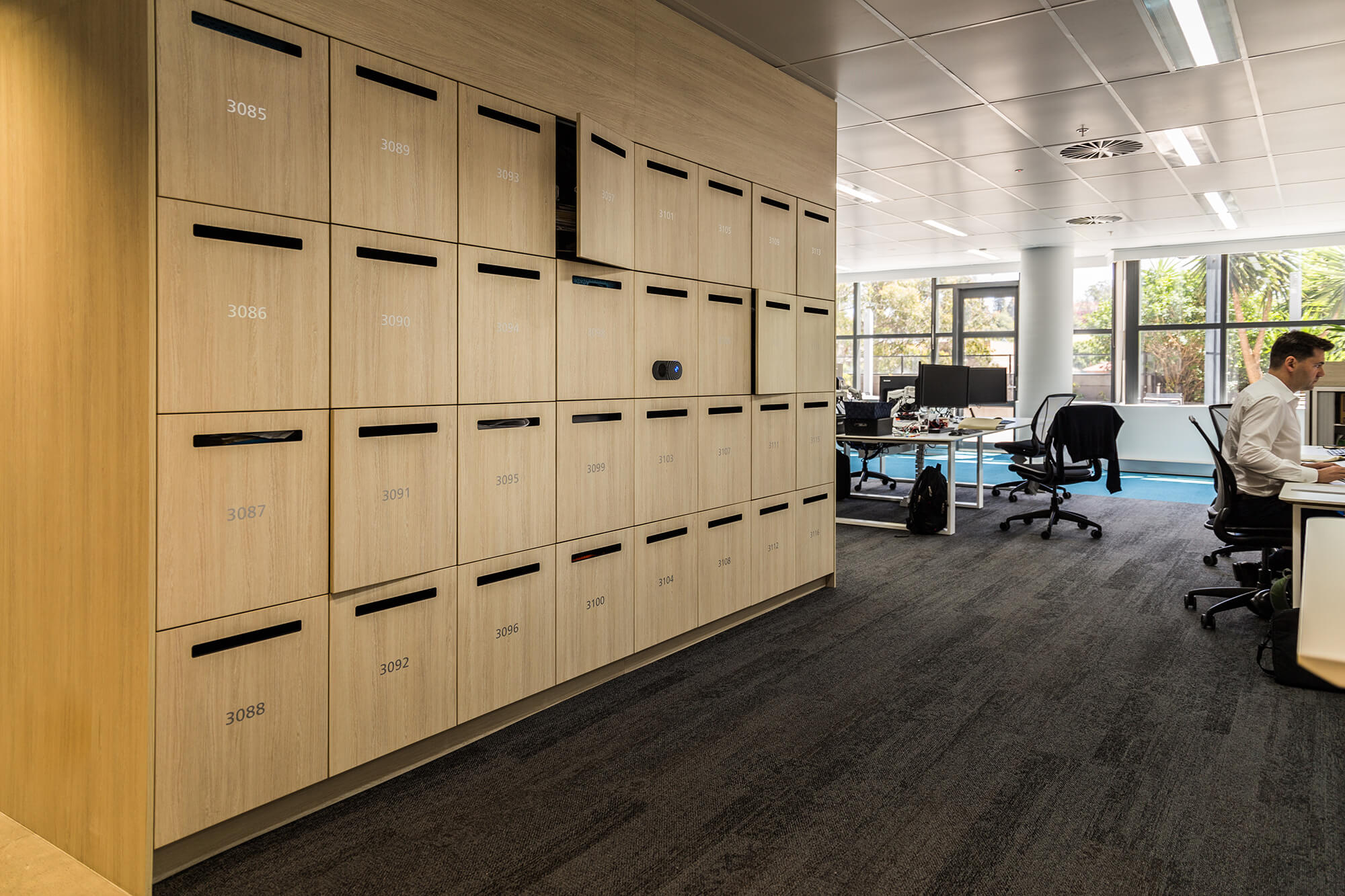
Even the most advanced smart locker systems fail if people do not want to use them.
Plan for:
- Clear sightlines and wayfinding
- Simple interfaces that work for first-time users
- Layouts that support accessible reach and comfortable circulation
- Materials that are easy to clean and maintain in high-traffic areas
The goal is not to create another “facility rule.” The goal is to make storage feel seamless.
Education and campuses: smart locker systems solve the same problem at scale
Universities face a harder version of the hybrid challenge. Students come and go between semesters. Departments store shared items in informal spaces. Projects and gear travel across campus.
A smart campus approach consolidates this mess into smart locker systems organized by zone, such as residential, academic, athletic, and administrative. That zoning reduces wasted square footage, improves accountability, and makes storage easier to manage through turnover periods.
Plan for growth, and for change
Hybrid work will keep evolving. Your storage should be able to evolve with it.
Modular designs beat rigid layouts. The advantage of modular smart locker systems is that you can expand locker banks as demand grows or reallocate space if utilization drops in the future.
Avoid locker plans that lock you into a single configuration forever. Plan for add-ons, reconfiguration, and changes in how people use the building.
Make storage feel easy again
Hybrid workplaces and campuses do not need more lockers. They need better planning and better systems.
When smart locker systems are right-sized for peak usage, organized around transition points, and built with shared security and usability in mind, lockers stop being an afterthought and start supporting how people work now.