
Parts Room Storage That Works Under Pressure
A pump fails. A conveyor breaks. An HVAC system stops.
The maintenance team needs a part, now. They head to the parts room, start digging through bins, and the part is not where it should be. Someone borrowed it. Nobody logged it. It is buried under something else. Five minutes becomes twenty.
The cost is rarely the part. It is the downtime and the labor wasted searching under pressure. When parts room inventory is disorganized, a small storage problem becomes an operational problem fast.
A well-designed parts room does not just store items. It prevents emergency searches, reduces downtime, and keeps parts room inventory predictable when everything else is urgent.
Why parts room inventory breaks down
Most parts rooms are not designed. They grow organically.
A tech stocks something. Another borrows from a different section. Old inventory never gets removed. Labels fade. Nobody is sure what is in stock. That can feel manageable during routine work, but it fails spectacularly when you need something quickly.
If you want parts room inventory that works under pressure, design for pressure. The goals are simple:
- Every part has a dedicated location
- Any critical part can be found in under two minutes without hunting
- You can tell immediately whether a part is in stock
- Restocking does not require shutting down the room or “reorganizing later”
That requires intentional design, not another round of cleanup.
 Start with an audit of parts room inventory
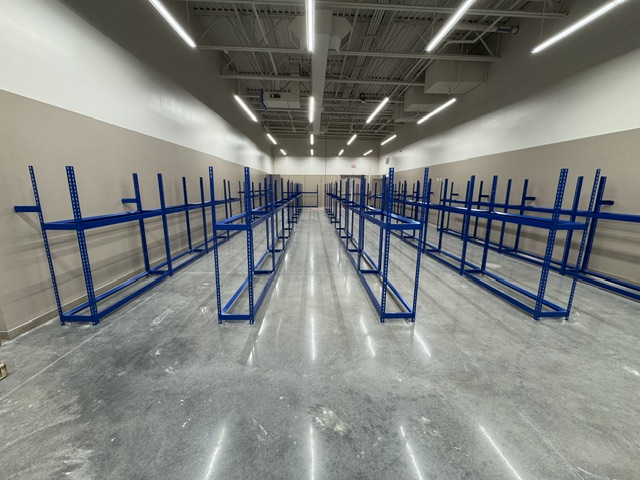 Start with an audit of parts room inventory
Before you reorganize anything, inventory everything.
What parts do you actually stock? How many units of each? How often do you use them? When was the last time a part moved?
This is where most teams discover the same four categories inside their parts room inventory:
- Dead stock that has not been used in years
- Duplicates ordered because no one checked first
- Mystery items no one can identify quickly
- High-velocity items that get pulled daily
You cannot organize chaos until you know what you are organizing. Clean this up first so the rest of the design work is based on reality.
Organize parts room inventory by criticality and access pattern
Not every part deserves prime shelf space.
A pressure-ready parts room uses the best locations for the parts that matter most when something fails.
A practical approach:
- Emergency parts: eye-level, central location, first place you look
- High-velocity parts: accessible and grouped near the work flow
- Moderate-use parts: organized but not in premium real estate
- Low-velocity and seasonal parts: overhead, archive area, or offsite if needed
Ask your maintenance team where they reach first when they are in a rush. That is your premium space. Build the parts room inventory plan around that.
Group by system, not by part type
Many parts rooms are organized by category, bearings with bearings, belts with belts, fasteners with fasteners.
Maintenance does not think that way. When the HVAC fails, techs want HVAC-related parts together. When a conveyor goes down, they want conveyor-related parts together.
Organizing parts room inventory by system reduces searching and eliminates the “I need to check three different places” problem. A practical breakdown might include:
- HVAC
- Electrical
- Hydraulics
- Structural and mechanical
Within each system zone, organize by frequency of use.
Labeling is not optional. It is operational.
Clear, durable labeling is the difference between a two-minute retrieval and a fifteen-minute hunt.
Effective parts room inventory labeling usually includes:
- Location labels for shelves and bays, not just items
- Section markers by system, such as HVAC, Electrical, Hydraulics
- Item labels with part number, description, and reorder point
- Optional color-coding by system to reduce mistakes under pressure
Handwritten notes fade, fall off, and get ignored. Use durable labels and keep them consistent.
Also, maintain a master list. Digital is ideal, but even a posted map helps if it is kept current. The goal is that anyone can confirm stock and go directly to the right location without guessing.
Reorder points prevent stock-outs and panic
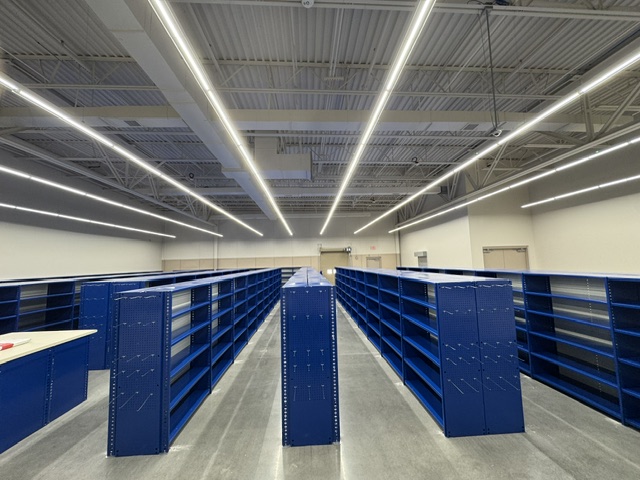
Parts that fail are often the ones nobody expected to need. That is why minimum levels matter.
For high-velocity parts room inventory, set reorder points so replenishment is triggered before you hit zero. For slow movers, keep at least one spare. For emergency-only parts, keep more than one.
Track usage in a simple log and review it quarterly. Three months of real data beats assumptions every time.
Materials and durability: storage has to hold up to real use
A parts room is not a closet. It is operational inventory with real replacement cost, and it gets handled under pressure.
That is why storage durability matters as much as organization. Parts room inventory should be supported by storage that matches the environment:
- Open shelving for consumables and high-velocity parts that need quick access
- Locked cabinets for high-value items like electronics and specialty components
- Segregation where contamination risk or security matters
A practical mix of locked and open storage reduces loss without slowing down the work.
Modular casework and secure lockers can also help segregate expensive items while keeping everyday parts immediately accessible.
Density when space is tight: go vertical before you expand
When the footprint is constrained, density matters. But density should not create chaos.
Use adjustable shelving so you can match shelf spacing to the inventory:
- Tight spacing for small parts and bins
- Medium spacing for cartons and boxed assemblies
- Taller spacing for bulky stock
Static shelving with adjustable components supports this without locking you into fixed heights. As parts room inventory changes, the shelving adapts.
For ultra-high-density, low-footprint storage, vertical lift modules are also worth evaluating, especially when you want the system to bring parts to the technician and track inventory movement automatically.
Keep parts room inventory organized with a simple operating standard
Once it is organized, you have to keep it organized. The easiest way is a lightweight checklist and one owner.
A sustainable parts room inventory routine often includes:
- End of shift: items returned to correct locations
- Weekly: verify high-use items meet minimum levels
- Monthly: spot-check against the master list and fix discrepancies
- Quarterly: remove dead stock and update reorder points based on usage
Ownership matters. Assign one person responsible for the room, restocking, and standards. Not a committee, and not “whoever is nearby.”
Pressure test the parts room inventory process
The real measure of a parts room is what happens at 2 AM when a critical system fails.
Can someone find the right part in two minutes without hunting? Do they know it is in stock? Is the location clearly labeled? Can someone unfamiliar with the room succeed under pressure?
If yes, your parts room inventory design works.
If no, it is time to redesign.
Build parts room inventory that supports uptime
The goal is not a perfect looking room. The goal is a parts room that protects uptime.
O’Brien Systems helps maintenance and facility teams translate real maintenance patterns into organized, durable storage that prevents downtime.
Request a parts room layout review to evaluate your current parts room inventory flow, storage durability, labeling, and density, then build a plan that works when the pressure is real.