
Storage Procurement Before Budget Season: A Pre-Checklist
Storage procurement lives or dies in budget season. You get one shot to ask for the dollars, and if you walk in guessing at dimensions, estimating load requirements, or glossing over the real problem, the request will either get denied or cut in half.
Finance wants specifics. Procurement wants specs. Leadership wants to know why you are asking and what the return is.
That is why storage procurement starts before you ask for pricing. It starts with measurement, documentation, and a clear case that ties storage to operational impact, compliance risk, and time savings.
What finance and procurement actually want
Before you draft a request, assume your stakeholders are asking three questions:
- What is the current state? How much space are we using and what is failing?
- What is the gap? What are we missing and what is it costing us?
- What is the fix and cost? What is the solution, timeline, and total cost of ownership?
Vague requests die in committee. Clear storage procurement requests move forward.
 The storage procurement pre-checklist: measure before you ask
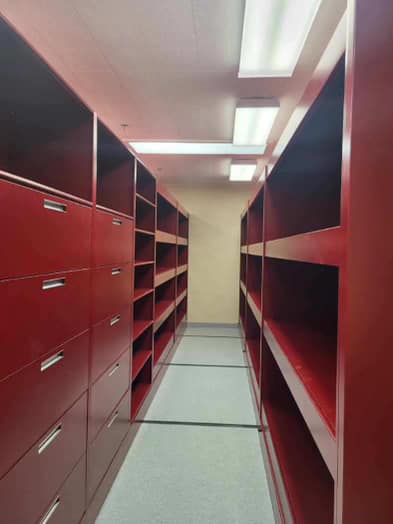
This is the data that makes storage requests credible. Use it to build your scope, validate feasibility, and speed up approvals.
1) Dimensions and layout
For every storage area, capture:
- Length, width, and height from floor to ceiling
- Current shelving, locker, or cabinet configuration and spacing
- Ceiling height, column locations, HVAC obstacles, and electrical or plumbing access
- Door swing clearances and access points
- Egress, aisle width, and fire code considerations
- Photos or simple sketches to remove ambiguity
This is the foundation of storage procurement. If you cannot show what space you have, you cannot credibly justify what you need.
2) Capacity and use
Document how the space is actually used:
- Inventory volume, weight, and seasonal peaks
- Load per shelf or locker, based on what is being stored
- Usage frequency, daily, weekly, or seasonal
- Number of users accessing each area
- Peak times and bottlenecks
Procurement is easier when you can explain access patterns and loads in plain terms. It reduces change orders, rework, and mismatched solutions.
3) Problems and costs
This is where storage procurement gets approved or rejected. Tie the problem to measurable impact.
Capture:
- What fails every year, such as breakdowns, lost inventory, or fire code issues
- Hours spent hunting for items or dealing with storage problems
- Equipment lost or damaged due to poor storage
- Overtime or productivity loss due to storage inefficiency
- Audit findings, inspection notes, or compliance concerns
If you want a fast “yes,” quantify the pain in time and dollars.
4) Current system age and condition
If your storage request includes upgrades or replacement, document:
- Age of existing shelving, lockers, and cabinets
- Maintenance costs and frequency
- Failed components, such as rusted shelves, broken hinges, cracked doors
- Warranty or support status
This strengthens storage procurement because it shows you are not asking for new equipment as a preference. You are responding to asset failure and lifecycle reality.
How to present the storage procurement financial case
Once you have the data, frame it the way finance talks.
- Current problem, in annual cost
- Proposed solution, with a clear scope
- Payback period and total cost of ownership over time
The goal is not to sound technical. The goal is to be specific.
Do not lead with features. Lead with the cost of the problem and the cost of continuing to ignore it.
The hidden questions committees always ask
Even when they do not say it directly, budget reviewers are looking for these answers.
Can you describe the problem without jargon?
Avoid abstract language. Describe what is happening and what it costs, such as time spent searching, repairs, and risk exposure.
Is this necessary or nice-to-have?
Tie storage procurement to operational failure, compliance risk, safety, or lost productivity. “Nice to have” does not get approved. “We cannot pass inspection without this” often does.
Have you explored cheaper options?
Show that you considered reorganizing, reconfiguring, or retrofitting before proposing replacement. It signals diligence and builds credibility.
Who else is involved?
If facilities, operations, compliance, or the fire marshal have input, include it. Multi-stakeholder needs often accelerate approvals.
What is the timeline?
“As soon as possible” is not a timeline. Tie storage procurement to a date and a consequence, such as a peak season, inspection, or operational milestone.
Tools that make storage procurement easier
You do not need complex software to improve your request quality. You need consistent documentation.
Useful tools:
- A simple spreadsheet that includes area name, dimensions, current storage type, condition, problems, photos, and priority
- A phone measurement app for quick baseline dimensions
- A basic fire code checklist for aisle widths, egress, and storage height limits
This is how storage procurement shifts from “estimate” to “plan.”
Office and facilities vs public safety: the same process, higher stakes
For office and facilities teams, storage procurement is often tied to efficiency, space, and predictable access.
For government and public safety, storage procurement often carries additional pressure around compliance, controlled access, and audit defensibility. The process is the same. The consequences of vague specs are higher.
In both environments, the fastest path to approval is clear measurement, a defined scope, and a financial story that ties storage to real operational impact.
Make storage procurement easy to approve
Budget season is not the time to start measuring. It is the time to present.
If you want storage procurement that gets greenlit, build your request on documentation, not hunches. Walk in with dimensions, loads, usage patterns, pain points, and a clear cost-of-doing-nothing case.
Request a storage procurement budget pre-check consultation. We can help you quantify the problem, validate your specs, and build an ROI case that your procurement and finance teams can approve with confidence.