
Stop Letting Your Records Room Run the Show
Records rooms that do not hate you back: corporate and legal file storage redesign
Records rooms tend to evolve by accident. A few cabinets here. Extra shelving there. A “temporary” overflow solution that becomes permanent. Before long, the room works against the people who rely on it. Retrieval slows down, aisles get blocked, compliance becomes harder and audits feel risky.
The good news is that corporate and legal records rooms can be redesigned to be calm, efficient and predictable, without expanding your footprint or disrupting daily operations.
Here is how to think about a records room that finally works with you.
Start with reality, not square footage
Most records room redesigns fail because they start with dimensions instead of behavior.
Before measuring walls, ask:
-
How often are files accessed, and by whom?
-
Which records must remain on site for legal or regulatory reasons?
-
What causes delays today: storage density, labeling or access control?
In many corporate and legal environments, the problem is not total space. It is wasted air, oversized aisles and storage systems that were never designed for high-frequency retrieval.
High-density does not mean high frustration
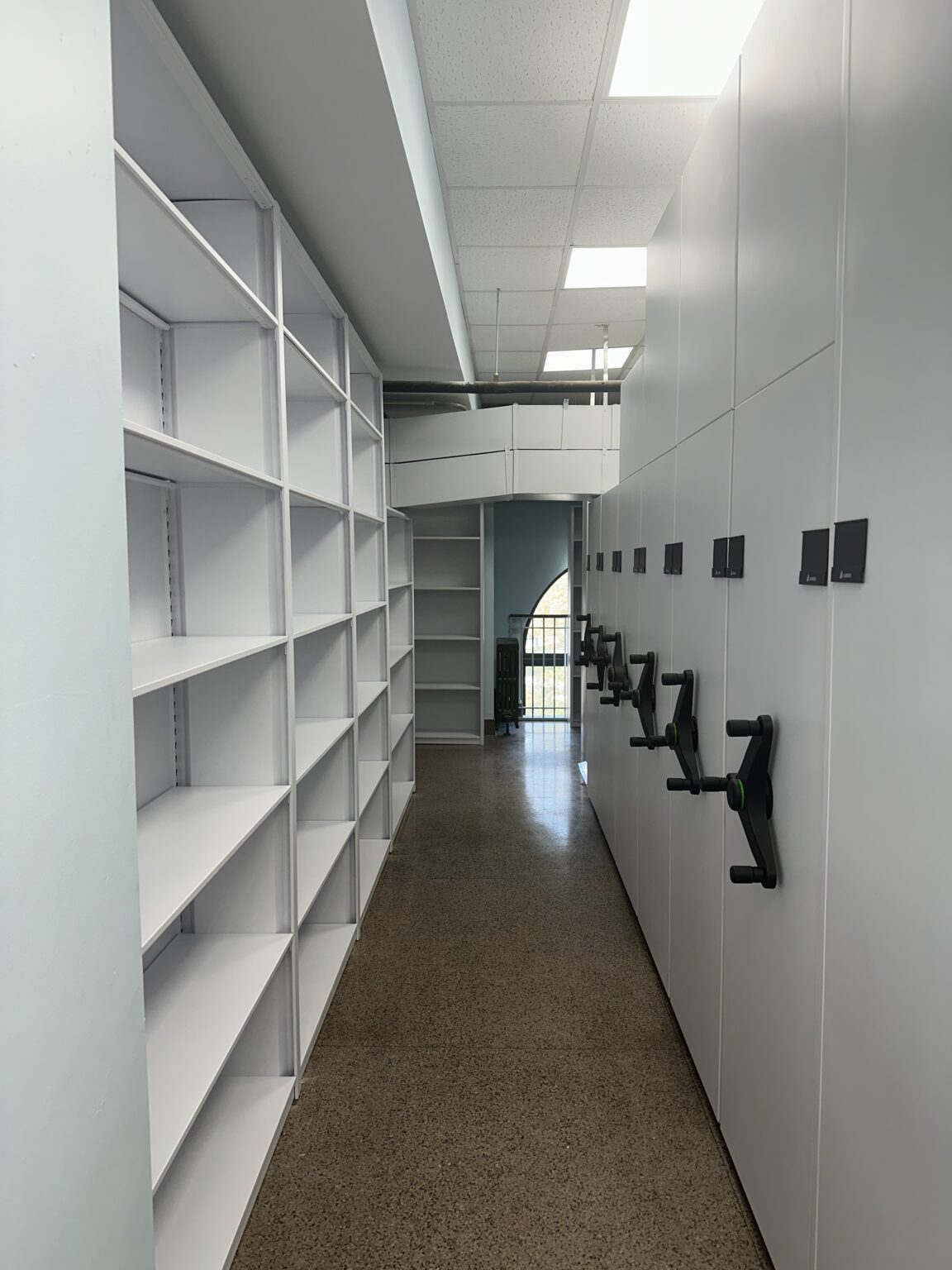
High-density mobile storage sometimes gets labeled as complicated or slow. In reality, modern systems are designed for active records rooms.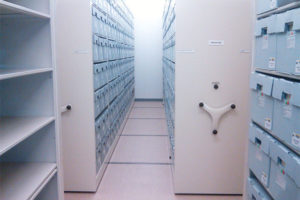
When planned correctly, mobile shelving can:
-
Double or even triple capacity in the same footprint
-
Keep files at a consistent, reachable height
-
Provide aisle access only where it is needed, when it is needed
The key is layout discipline. A records room that supports multiple users at once needs clearly defined zones, smart aisle placement and controls that feel intuitive.
Choose cabinets and shelving for records, not furniture catalogs
Records rooms are not showrooms. Storage selection should be driven by file format, access frequency and retention requirements, not aesthetics.
Common mismatches we see:
-
Lateral files used where rotary or mobile systems would reduce travel time
-
Shelving depths that force double-stacking and increase misfiles
-
Cabinets that look fine but do not support effective labeling and indexing
A well-designed records room treats cabinets as part of a system, not individual pieces of furniture.
Compliance should feel boring, and that is good
Corporate and legal records often come with retention rules, privacy requirements and audit expectations. A redesigned records room should make compliance easy and repeatable.
That means:
-
Controlled access points, not ad hoc locks
-
Clear separation between active, inactive and hold-status records
-
Layouts that support clean inventories and faster audits
If staff have to rely on memory to stay compliant, the room is not helping.
Plan for reduction without betting everything on digitization
Digitization helps, but it rarely eliminates paper as quickly as organizations expect. Litigation, contracts, HR records and regulated documents tend to stay physical longer than planned.
A smart redesign assumes:
-
Gradual reduction, not overnight elimination
-
Hybrid storage that supports paper and digital workflows
-
Flexibility to reconfigure layouts as retention schedules evolve
Designing for flexibility prevents today’s solution from becoming tomorrow’s bottleneck.
The payoff: speed, clarity and fewer headaches
When a records room is redesigned intentionally, the impact shows up quickly:
-
Faster file retrieval
-
Fewer misfiles and lost records
-
Less staff time spent navigating storage instead of doing real work
Most importantly, the room stops being a source of friction and starts quietly doing its job.
At O’Brien Systems, we approach corporate and legal records rooms as working environments, not static storage. The goal is simple: create systems that are efficient today and adaptable tomorrow.
If your records room feels crowded, confusing or overdue for a reset, a thoughtful redesign may be all it takes to make it work again without expanding your footprint or disrupting operations.