
The Supply Room Everyone Avoids And How to Fix It
Every workplace has one.
The supply room people only enter when they have to. The one with half-open boxes, mystery bins, and “temporary” piles that never move. The one where it is faster to order duplicates than to search for what is already there.
It feels like a small problem, until you add up the searching time. Someone is always in there hunting for paper, ink, labels, or the one tool everyone swears exists. That time does not just disappear. It comes out of productivity.
This is not an organization problem. It is a supply room organization problem driven by space planning and workflow.
When storage is not designed around how items are received, stored, retrieved, and restocked, the room becomes a daily drain for office and facilities teams. The fix is not another cleanup. The fix is supply room organization built on layout design, workflow, and the right storage systems for the job.
Why supply rooms become a bottleneck
Most supply rooms were never designed. They were accumulated.
A filing cabinet shows up. Someone adds shelves. Over time, you end up with chaos organized by accident instead of logic. That is how supply room organization slowly breaks down.
What we see consistently:
- Supplies arrive faster than the room can absorb them, so overflow becomes permanent
- Items do not have a defined home, so everything becomes “temporary”
- High-use items are stored in inconvenient locations, so staff create shortcuts
- The layout is not built for restocking, so replenishment becomes inconsistent
- Poor visibility means you own inventory, but no one can see it from the aisle, so more gets ordered
The result is predictable. People avoid the room, supplies scatter into offices, and you keep buying what you already have because no one can find it. Effective supply room organization prevents that pattern.
Signs your supply room organization is not working
If any of these sound familiar, the room is already costing you time:
- The floor is used as storage
- Boxes are stacked because shelving is full or hard to access
- Multiple people cannot work in the room at the same time
- You run out of common items unexpectedly, even though you know you “have them somewhere”
- “We should reorganize this” is said often, but nothing sticks
These are not housekeeping issues. They are layout and storage method issues, and they are exactly what supply room organization is supposed to solve.
Once-a-year cleaning is not the fix. Supply room organization is.
Pick path efficiency is one of the least expensive problems to solve and one of the most expensive to ignore.
A poorly organized supply room does not just slow down one person. It slows down everyone who uses it. That is why supply room organization should focus on how people actually pick items, not how you wish they picked them.
Instead of organizing by habit, organize by pick path.
The framework for supply room organization: pick-path-first
A supply room should support one thing: fast, repeatable access to the right items.
Here is a practical supply room organization framework that holds up under daily use.
Step 1: Map your most-used items
Spend one week tracking what gets pulled. Not what you think gets pulled, what actually gets pulled. Your goal is for most common supply runs to be completable in one efficient pass through the room, ideally an out-and-back line or a simple loop.
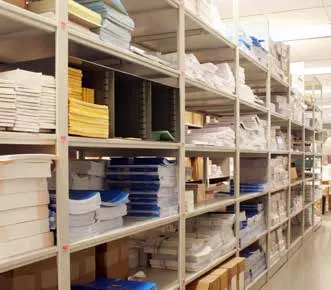 Step 2: Organize by use frequency and what gets picked together
Do not organize only by broad categories like “paper products” or “writing supplies.” Good supply room organization is built around what people pick together in one trip.
A practical approach usually looks like this:
- Core supplies together on the primary aisle
- Occasional supplies on a secondary aisle
- Bulk or slow-moving items higher up or deeper in the room
- Small high-rotation items in drawers or cabinets with clear labeling
Step 3: Build zones that make the room easy to use
Most supply rooms improve quickly when you apply these zoning principles:
- Put the fastest movers closest to the door, at comfortable height and with clear visibility
- Separate bulk from daily access so grab-and-go stays fast and replenishment stays simple
- Create a dedicated restock zone so deliveries have a staging spot and aisles do not become dumping grounds
This is the difference between “we cleaned it” and real supply room organization that stays organized.
Step 4: Use cabinets strategically
Cabinets are not for everything. They are for high-value items that need security, small items that need structure, items that benefit from dust protection, and supplies you want to limit self-service access to.
In many rooms, open shelving handles most cartons and standard inventory, and cabinets and drawers handle the specialty categories. That balance keeps the primary flow fast and uncluttered.
Step 5: Label everything at eye level
If someone has to crouch or reach just to read a label, they will guess. Guessing leads to disturbed inventory and misplaced items.
Make every location clearly visible and labeled where people naturally look. Consistency matters more than perfection.
Step 6: Implement a simple reorder signal
Assign a minimum level for each high-turnover item. When stock hits that level, use a simple trigger to flag reorder. The point is to make “we are low” obvious without counting. This is a small step that makes supply room organization sustainable.
Storage systems that support supply room organization
The right storage systems make the room easier to maintain, not just easier to clean.
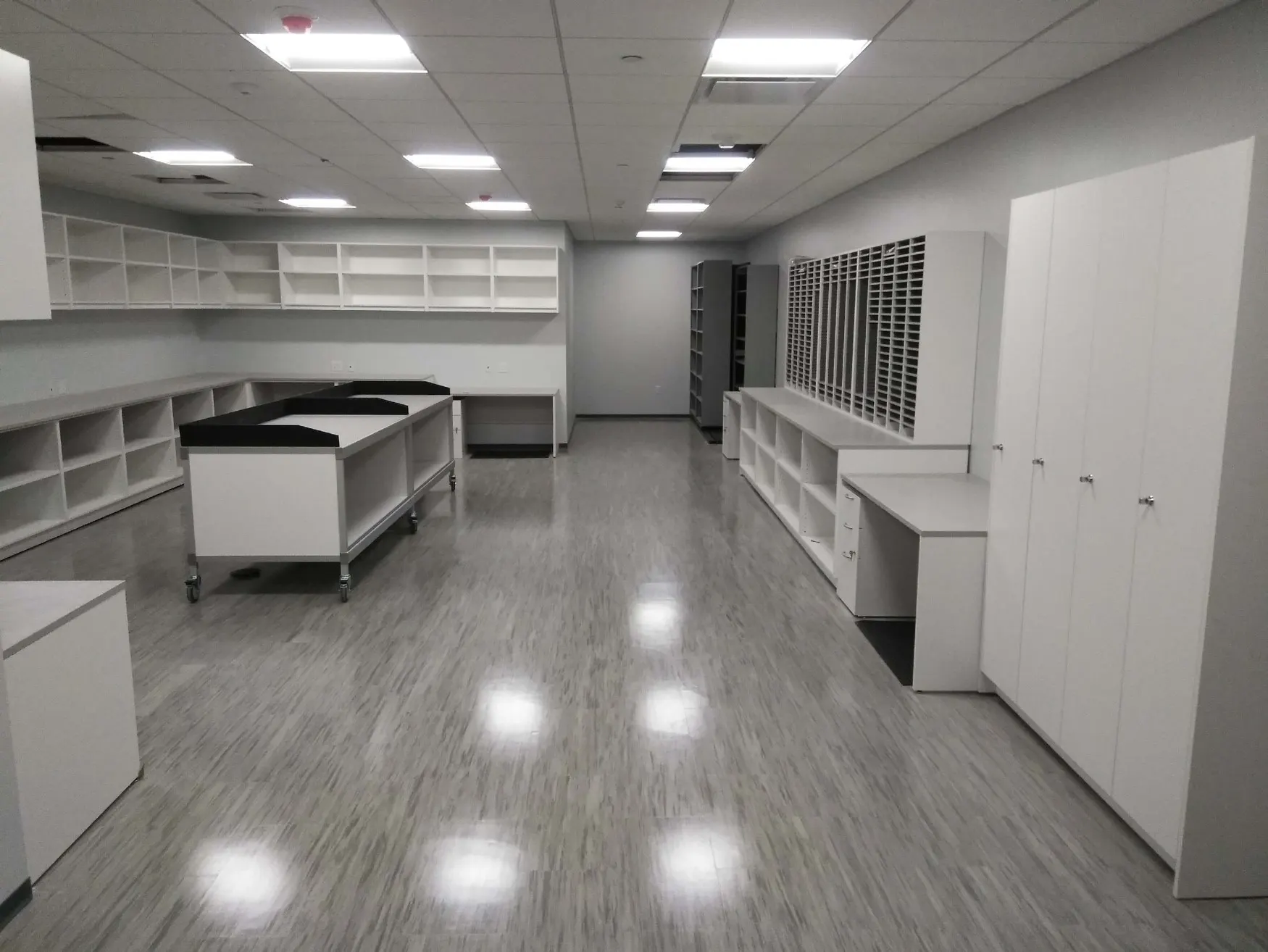
Common fits for supply rooms include:
- Static shelving for cartons, bins, and straightforward capacity
- Drawer cabinets for small, high-rotation items that disappear on open shelves
- Modular casework if the room includes frequent handling, kitting, or light assembly
- Lockers when accountability and controlled distribution reduce loss and confusion
The key is choosing storage based on access, visibility, and replenishment, not based on what happens to fit the wall.
FAQ: supply room organization
What is supply room organization?
Supply room organization is the layout, zoning, labeling, and restocking process that makes supplies easy to find, easy to return, and easy to replenish without guesswork.
How do you set up a supply room so it stays organized?
Start by tracking what gets used most often, place high-use items in a primary aisle at comfortable height, label locations clearly, and add a simple reorder signal so replenishment is consistent.
What is the fastest way to improve supply room organization?
Fix the pick path first. Reduce backtracking by placing the most frequently picked items together, closest to the entrance, and separating bulk inventory from daily access.
Fix the system, not just the shelves
The supply room everyone avoids is not broken. It is under-designed.
Start with a one-week audit of actual usage. Build your layout around pick paths, not assumptions. Then lock it in with clear labeling and a simple restock protocol. That is the supply room organization that lasts.
Request a supply room walkthrough. We will assess your current layout, identify pick-path inefficiencies, and recommend a plan for speed, visibility, and restocking consistency.