
Your Evidence Room Should Not Be a Liability
In public safety, evidence is not just property. It is accountability, credibility, and legal protection.
When evidence is compromised, misplaced, accessed improperly, or stored in a way that creates doubt, the evidence room storage setup becomes more than an operational headache. It becomes a liability.
Evidence must go through a specific chain of custody before being logged, and proper, secure evidence room storage helps prevent compromise. The good news is that most evidence room risks are not caused by bad intent. They are caused by layouts and systems that were never designed for the pace, volume, and pressure of real evidence handling.
Here is what an evidence room needs to do, and how to fix the weak points that create risk.
Where evidence room storage goes wrong
Evidence room storage rarely fails in a dramatic way. It fails in small ways that add up.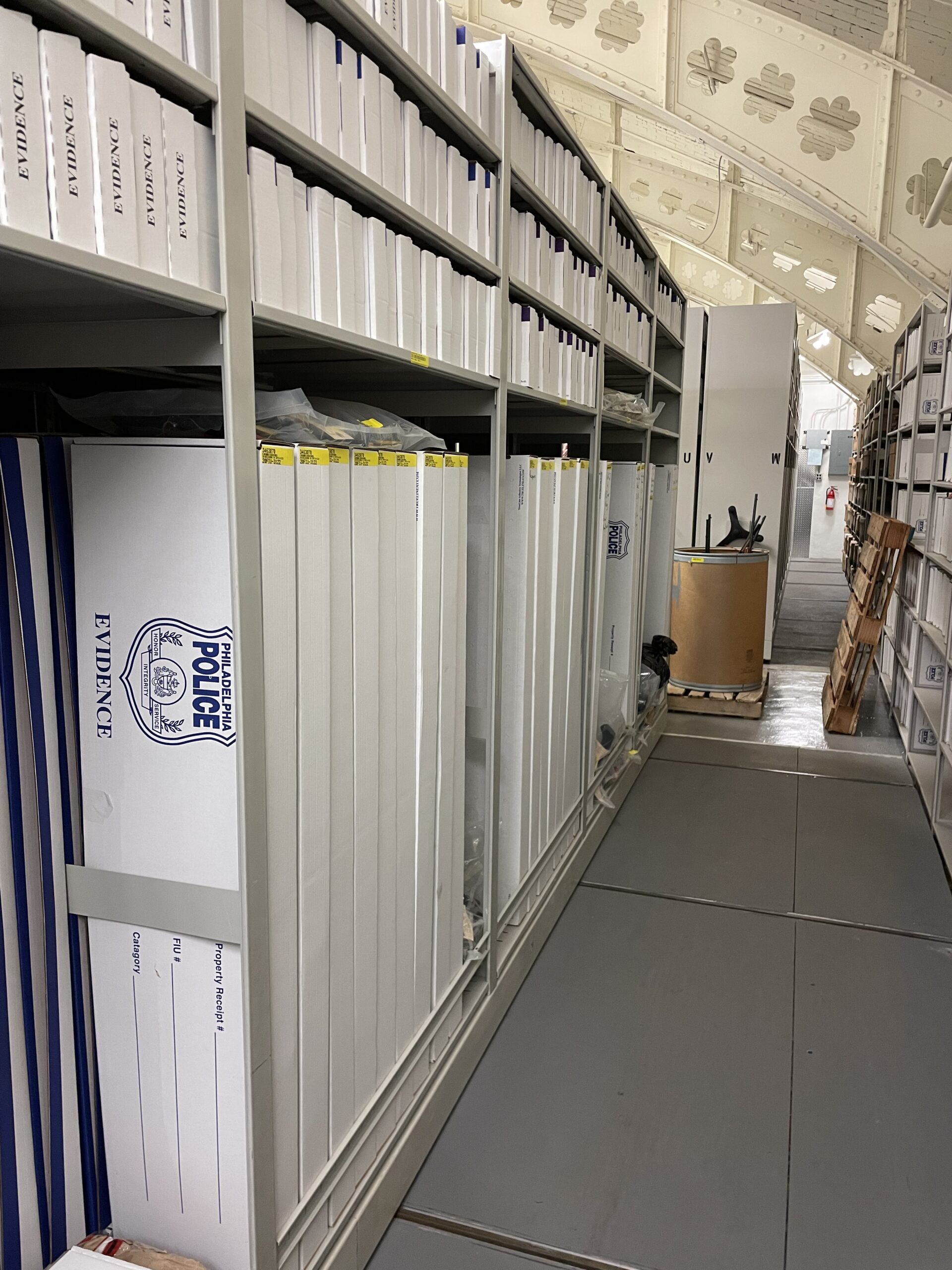
Common breakdowns include:
- Unclear handoff points where items sit “temporarily” without a defined next step
- Overcrowded shelving and floor-staged boxes that invite misplacement
- Too many people needing access, with too little control
- Congestion during busy periods that encourages shortcuts
- Storage that does not separate active evidence, archive evidence, and special handling
Public safety work is time sensitive. Unorganized storage spaces slow teams down, and evidence room storage should never be the reason a process drags.
Chain of custody depends on evidence room storage that supports the process
Policies and training matter, but evidence room storage must support the policy.
Chain of custody pressure points are usually the moments of transfer:
- Officer drop-off
- Technician intake and logging
- Storage assignment and retrieval
- Release to lab, court, or authorized personnel
If those handoffs happen in open space, shared work surfaces, or crowded aisles, evidence room storage is working against your compliance procedures. The best evidence room design makes the correct process the easiest process.
Start with secure intake, because that is where risk begins
Evidence handling starts before anything reaches long-term evidence room storage.
Evidence lockers are built and configured with security as the number one priority. Pass-through evidence lockers allow officers to drop off evidence on one side while an evidence technician collects it safely from the other side, and then access is limited to authorized users.
This intake design strengthens evidence room storage at the most vulnerable moment in the chain.
Build evidence room storage zones that match real handling
Evidence room storage works best when the layout enforces separation. This reduces mistakes and makes audits easier.
A practical zoning approach includes:
- Intake and transfer: Secure drop-off that supports controlled handoff
- Processing and packaging: Defined space for logging, labeling, and prep
- Active evidence room storage: Organized access for items that move frequently
- Evidence archive storage: High-capacity storage for retention and closed cases
- Supplies and containers: Controlled storage for bags, containers, and packaging materials
Evidence room storage is not one product. It is a coordinated system.
A secure evidence room is not optional
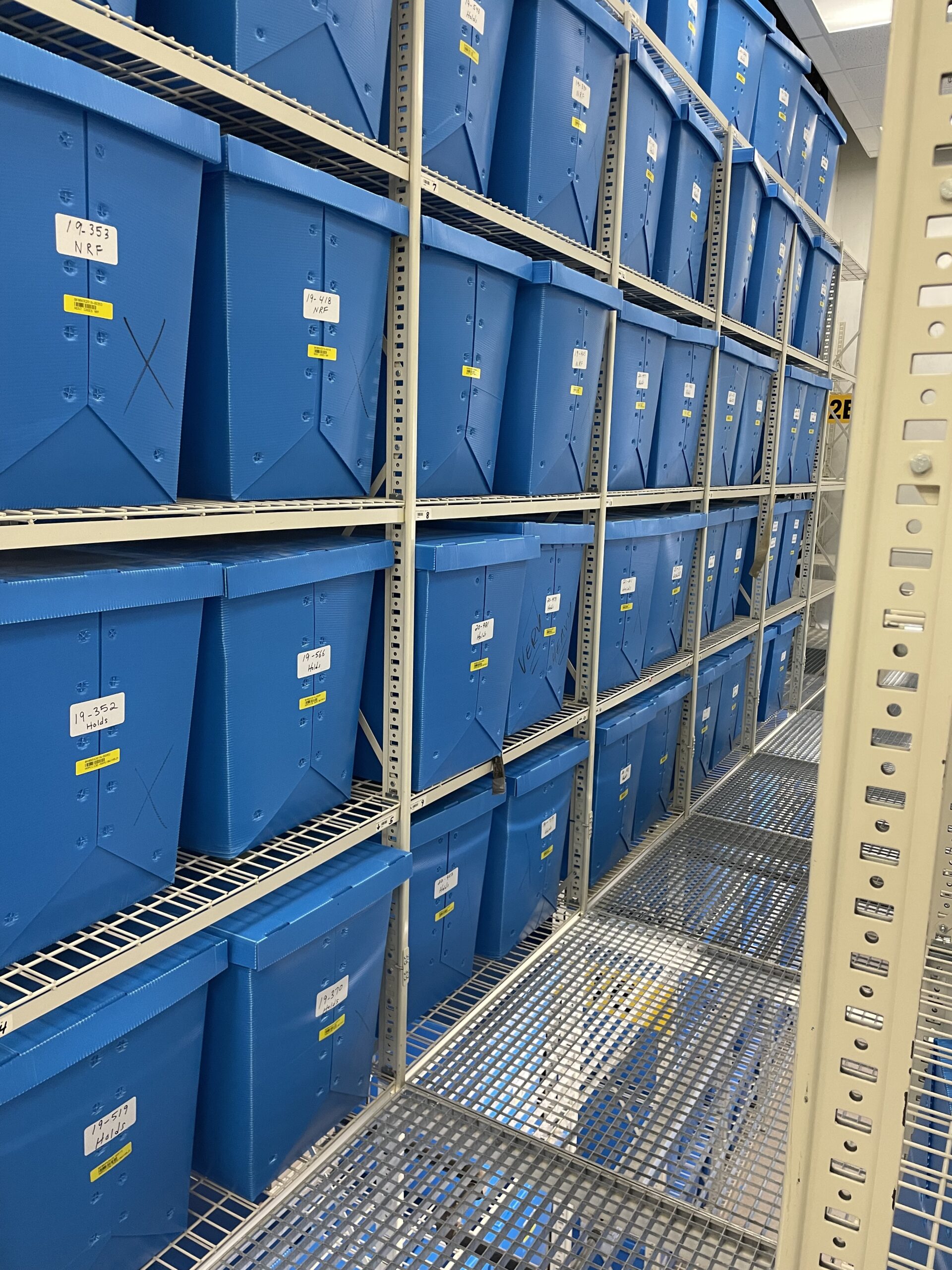 Evidence should not live in open, informal areas. If it needs to be protected, evidence room storage should make that protection routine.
Lockable cabinets are often part of a secure evidence room storage plan, especially for items that require controlled access and consistent organization.
The goal is not to make the room feel restrictive. The goal is to make secure storage the default.
Increase evidence room capacity without creating chaos
When caseload grows, evidence room storage often becomes reactive. Boxes end up on the floor, aisles narrow, and access becomes inconsistent. That is when risk increases.
High-density mobile shelving can optimize existing space and free up room for an ever-growing caseload in government and taxpayer-funded facilities where adding space may not be realistic. Evidence room storage also depends on keeping items off the floor and in a safe, secure system, with mobile and static options available for archival box storage.
More capacity is helpful only when the evidence room storage layout still supports clean access and controlled handling.
Add accountability tools that match the desired workflow
Security is more than a lock. It also requires visibility and accountability.
If your process relies on tracking and auditability, evidence room storage should support that workflow from intake through retrieval, instead of forcing staff into manual workarounds. Tools like barcode or RFID tracking can help reinforce chain-of-custody practices by improving traceability and reducing ambiguity.
When storage design and process align, audits become easier and the room is more defensible.
A quick way to spot evidence room storage liability risk
If any of these are true, your evidence room storage may be introducing unnecessary risk:
- Evidence sits in “temporary” locations without a defined handoff
- Storage is crowded enough that items are moved twice to put one thing away
- More people have access than the process requires
- Active evidence and archive evidence are mixed together
- Packaging supplies are scattered or unsecured
- Staff feel rushed when the room is busy and shortcuts become normal
Fixing this is rarely about one change. It is about evidence room storage design that supports chain of custody, secure handling, and repeatable compliance.
Make evidence room storage support the case
The goal is not a perfect-looking room. The goal is to have an evidence room that protects chain of custody, supports secure storage, and reduces risk through consistent procedures.
O’Brien Systems’ services include evaluating current storage methods, designing more efficient storage systems, and workflow analysis that examines how documents and materials move through an organization. If you want to evaluate your current evidence room storage setup, the most productive starting point is a review of intake, zoning, access control, and capacity.
If your evidence room storage feels crowded, inconsistent, or overly dependent on “tribal knowledge,” it is worth redesigning before it becomes a liability.