
Static vs Mobile Shelving: The Real Comparison
Mobile shelving vs static shelving: the real comparison
If you are deciding between mobile shelving and static shelving, the answer is rarely “which is better.” The real question is which option solves your capacity and workflow constraints with the least friction, at the budget level you can actually support.
You have a fixed amount of square footage and a growing inventory problem. You can expand the building, which is expensive and slow. You can reduce inventory, which is usually not realistic. Or you can use your existing space more intelligently. That is why the mobile shelving vs static shelving comparison matters.
The problem: aisle space is wasted space
Traditional static shelving requires aisles so people can walk between rows and access inventory. Nothing can be stored in these aisles, yet they take up meaningful space in the room. In many facilities, aisle space is the single biggest reason storage areas hit maximum capacity early.
This is the core space-planning issue that the mobile shelving vs static shelving decision is trying to solve. Both approaches improve storage, but they do it in different ways.
 Mobile shelving: the space math
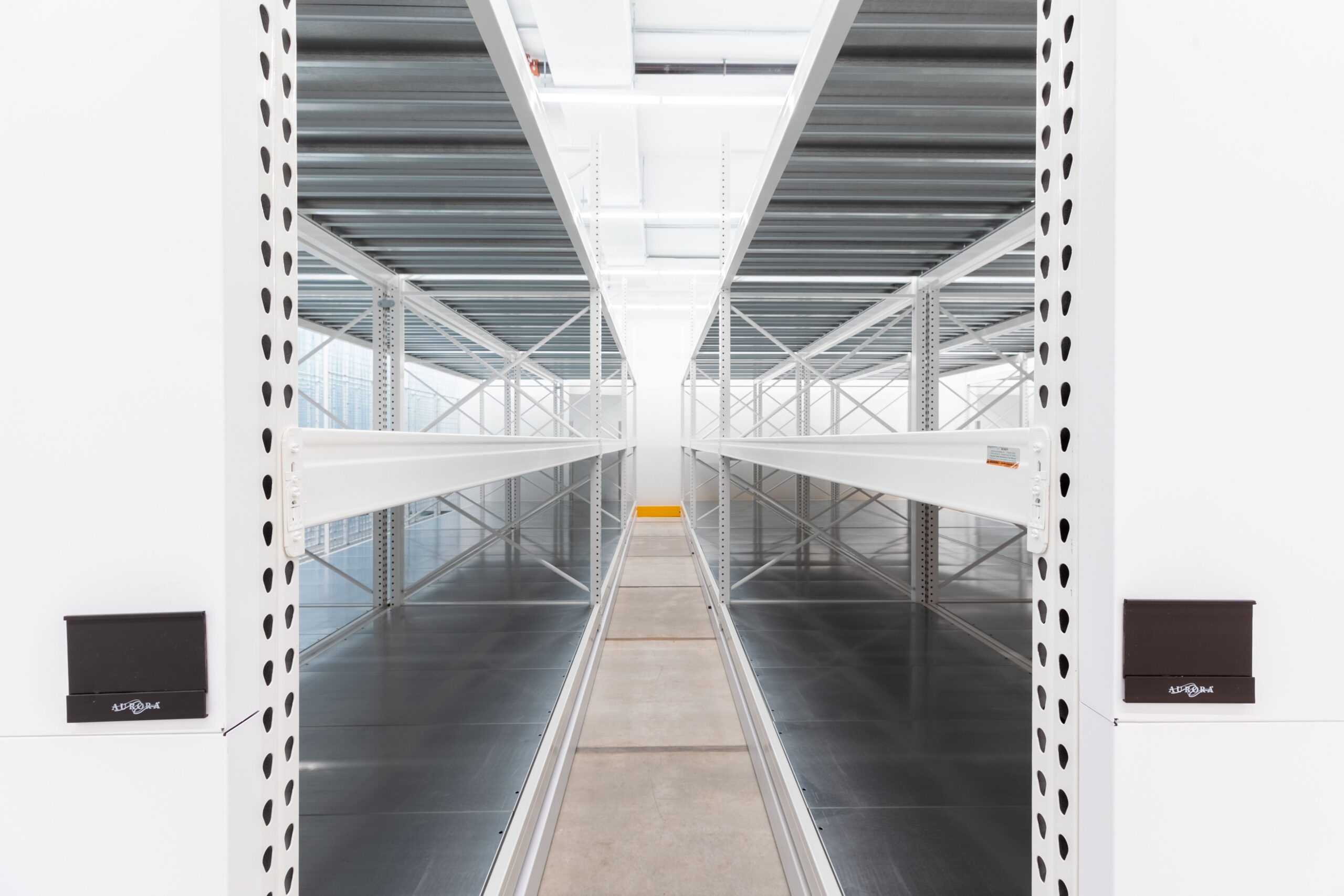 Mobile shelving: the space math
Mobile shelving (often called high-density or compact shelving) reduces internal aisles by placing shelving units on tracks. Instead of multiple fixed aisles, you create an access aisle only where and when it is needed.
The practical result is straightforward: mobile shelving increases how much of the room can be used for storage, because less of the floor is dedicated to permanent aisles. In many layouts, that translates to a significant capacity gain without expanding the footprint.
When mobile shelving makes sense
In the mobile shelving vs static shelving decision, mobile is usually the right call when density is the priority and access patterns are predictable.
Mobile shelving tends to fit when:
- You have outgrown the space and expansion is not an option
- You store higher-value inventory where density and controlled access matter
- Inventory is stable enough that “one aisle at a time” does not create a bottleneck
- You want to use the room more efficiently without sacrificing organization
Friction points with mobile shelving
Mobile shelving is a system. That means it requires planning and basic operational ownership.
Common friction points include:
- Motorized systems can require electrical infrastructure and maintenance
- Constant, high-volume picking can slow down if aisles need to be repositioned frequently
- The capital cost is usually more front-loaded than adding static shelving over time
- Shared access patterns can create congestion if multiple users need different aisles at once
If your storage area has multiple people accessing many different categories throughout the day, the “one active aisle” concept can become a workflow constraint. That is not a failure of mobile shelving, but a mismatch between layout and use.
Static shelving: the traditional approach with modern optimization
Static shelving does not remove aisles, but modern static layouts can optimize them. Better zoning, narrower aisle planning where appropriate, improved vertical use, and clearer organization can all increase usable capacity and speed retrieval.
In a mobile shelving vs static shelving comparison, static often wins on simplicity and flexibility. People understand aisles. Picking can happen simultaneously. Expansion is typically incremental, which helps many budgets.
When static shelving makes sense
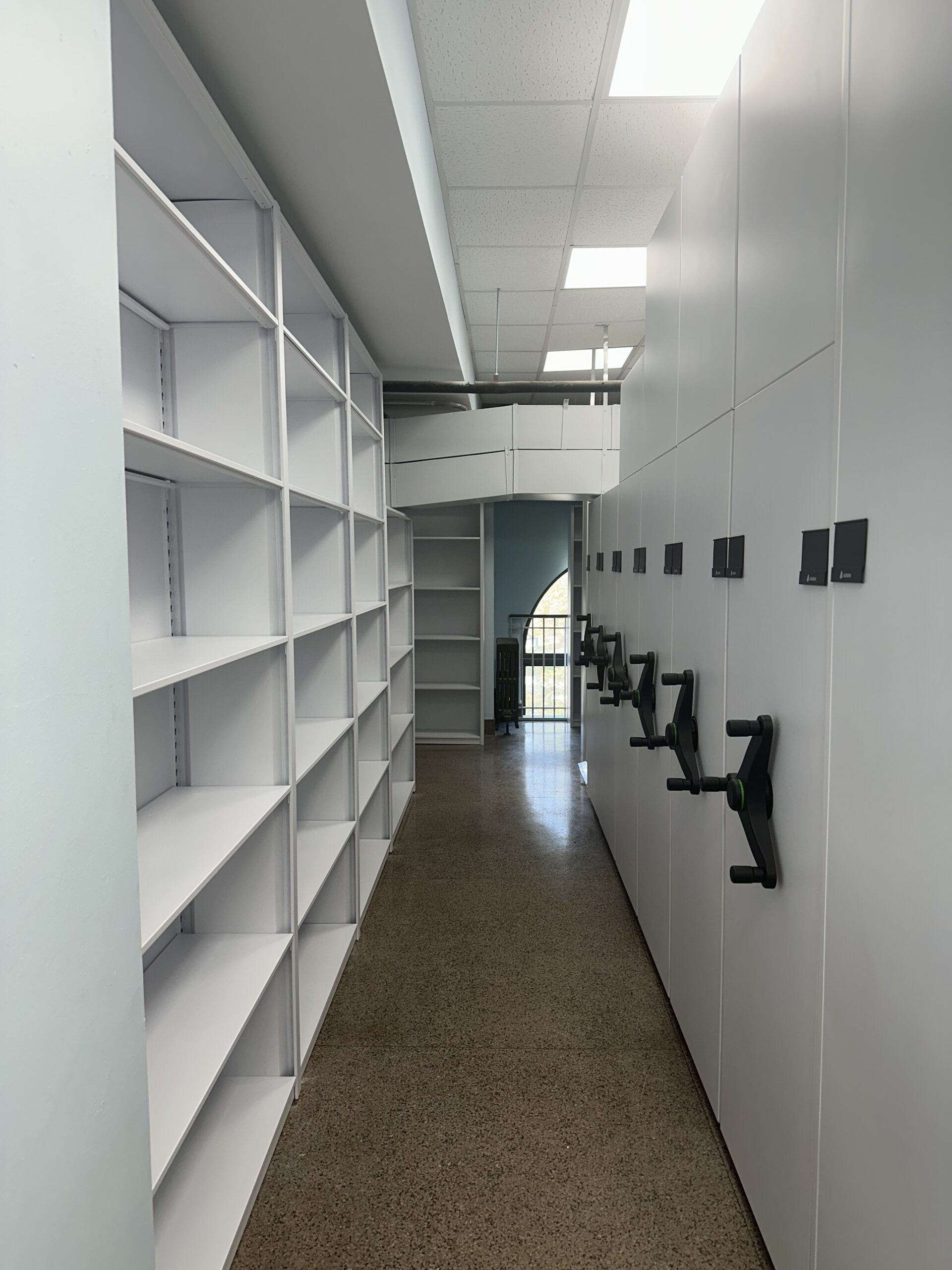
Static shelving is often the right answer when access speed, flexibility, and multi-user flow are more important than maximum density.
Static shelving tends to fit when:
- You have high-volume daily picking and need constant aisle access
- Inventory turns frequently and locations change often
- You want to expand capacity in phases
- You have infrastructure limitations that make mobile harder to implement
- The room layout or usage may change in the next few years
Friction points with static shelving
Static shelving has a ceiling. Even well-designed static layouts plateau because permanent aisles remain permanent.
Common friction points:
- You eventually hit a capacity limit if the footprint cannot expand
- You cannot squeeze out the last layer of density mobile shelving can provide
The decision framework facilities teams actually use
If you want a practical way to decide between mobile shelving vs static shelving, these questions usually make the answer clear.
1) Are you expanding or densifying?
If you need to densify an existing space and expansion is not realistic, mobile becomes attractive. If you are building capacity gradually or expect future layout changes, static often fits better.
2) What is your picking pattern?
If access is high-volume and continuous, static is typically faster because multiple people can use multiple aisles at once. If access is predictable or lower frequency, mobile can work well and may reduce travel.
3) What is your capital constraint?
If you need to spread cost over time, static is easier to phase in. If you have capital available and need capacity quickly, mobile can solve the footprint problem in a single implementation.
4) What is your inventory churn?
If inventory is stable and predictable, mobile can deliver density without operational pain. If inventory churn is high, static usually wins because flexibility matters.
5) What is your tolerance for operational friction?
Mobile can require more planning, infrastructure, and change management. Static can often be reconfigured with simpler day-to-day use This is the heart of the mobile shelving vs static shelving comparison. The best system is the one that fits the workflow you actually have.
Two scenarios that show why “best” depends on workflow
Scenario 1: When mobile made sense
In environments with predictable inventory and stable access patterns, mobile shelving can be a strong fit because it increases capacity without expanding and keeps the collection or record set consolidated.
Scenario 2: When static made more sense
In environments where access is unpredictable and multiple users need access at the same time, a high-density static layout can be the better answer. You may gain slightly less density than mobile, but you can protect speed and flexibility.
Space planning and ROI: what to measure
A smart comparison is not only equipment cost. It is the cost of the constraint.
When you evaluate mobile shelving vs static shelving, measure:
- Space ROI: How much capacity do you gain, or how much expansion do you avoid?
- Time ROI: How many steps and minutes are lost to travel, backtracking, and searching?
- Operational ROI: What does congestion, access control, or climate requirements cost you every week?
The goal is not just to buy shelving. The goal is to buy back time, reduce friction, and increase capacity in a way that lasts.
FAQ: mobile shelving vs static shelving
Is mobile shelving always higher capacity than static shelving?
Usually, yes, because mobile reduces permanent aisle space. The tradeoff is that access is typically one active aisle at a time, which may or may not fit your workflow.
Is static shelving always faster than mobile shelving?
Not always, but static often performs better for high-volume, multi-user picking because multiple aisles can be accessed simultaneously.
Can you combine mobile shelving and static shelving?
Yes. A hybrid approach is common when part of the inventory is stable and part is fast-moving. The right mix depends on access frequency and user congestion.
What is the biggest mistake in the mobile shelving vs static shelving decision?
Choosing based on density alone. The correct choice balances capacity, access patterns, and operational reality.
What to do next
The mobile shelving vs static shelving decision is about matching your situation with the right solution. One is cheaper upfront. One is denser. One is more flexible. The question is which problem you are actually trying to solve.
If you want clear options with real space math, a comparison walkthrough can model both scenarios and show the capacity and cost tradeoffs that matter for your facility.
Book a mobile shelving vs static shelving comparison walkthrough.