
Back to School Storage Triage: What to Fix Before Fall
August is your window. Hallways are empty. Teachers are not rotating through rooms. You have breathing room to walk every storage area, identify what breaks every year, and fix it before students come back.
Most schools wait until October. That is when a teacher cannot find lab materials, a locker jam turns into a daily issue, or shelving fails under textbooks. By then you are reacting, paying rush costs, and doing repairs at the worst possible time.
If you want back to school storage to run smoothly all year, treat August like a triage month, not a cleanup month.
The pattern: the same back to school storage failures every year
If you have been in education facilities long enough, you already know which areas fail first.
Common back to school storage trouble spots:
- Gym and PE lockers, where heavy use and wet environments strain hinges and locks
- Science and lab storage, where shelving gets overloaded and items end up stored unsafely
- Hallway lockers, where doors do not close and locks jam as students pack in materials
- Administrative storage, where records and supplies overflow into fire code risk territory
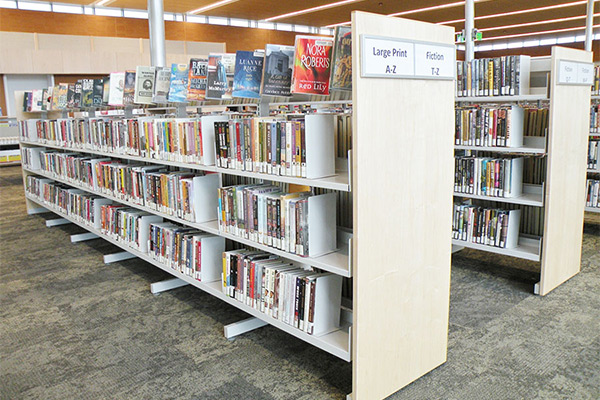
- Library and media areas, where overflow and broken carts create daily friction
Most schools fix these problems mid-year, when they are expensive and disruptive. Back to school storage triage means you fix them on your timeline.
The back to school storage triage process
Step 1: Walk every storage area and test it
Do not just look. Test.
During your back to school storage walkthrough, check:
- Lockers that do not open or close smoothly
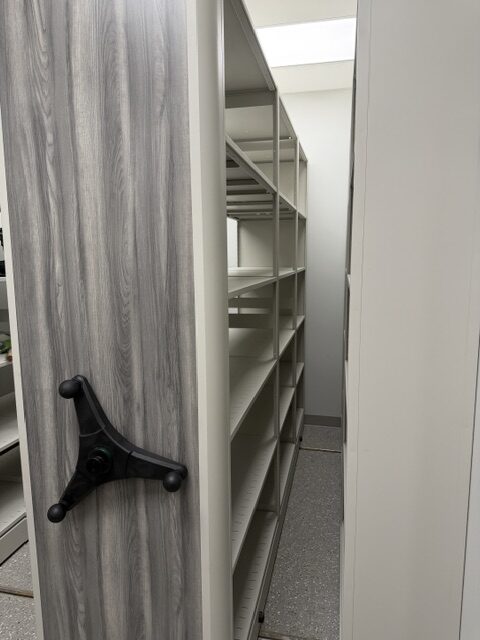
- Shelves that sag, wobble, or look overloaded
- Carts and mobile units with broken wheels or handles
- Fire code issues like blocked exits or overcrowded storage
- Areas where inventory disappears year after year
Ask teachers where the friction shows up first. That feedback is usually more accurate than assumptions.
Step 2: Rank issues by impact, not annoyance
Back to school storage triage works when you rank what to fix by what creates risk and disruption.
A practical ranking:
- Critical: must be fixed before students arrive, including fire code issues, broken locks that prevent access, structural failures, and lab safety hazards
- High: fix in the first two weeks, including heavy-use locker areas, overloaded shelving, broken carts, and supply closets with no organization
- Medium: fix by October half-term, including administrative storage reorganization and library reset work
- Low: schedule for next summer, including refinishing and cosmetic improvements
This keeps your team focused on the problems that will actually create downtime and disruption.
What you can fix in August, realistically
Back to school storage improvements are often not “big projects.” They are targeted fixes with high ROI.
Here is what commonly fits in an August window:
- Hardware and hinges repairs, including replacing broken hinges and fixing seized locks
- Shelving reinforcement and load redistribution to prevent collapse
- Mobile cart maintenance like wheels and brakes, which prevents daily frustration
- Capacity and organization improvements, including removing what does not belong and adding labels and zones
- Minor frame repairs like tightening bolts and correcting small damage
A lot of these fixes cost time, not money. But the impact is immediate because back to school storage problems are usually repeat problems.
What requires new equipment, and why planning matters
Some back to school storage failures cannot be fixed with a quick repair. They require replacement or new systems.
That includes:
- Locker banks that are structurally failing
- Shelving that is not adequate for load or use
- Specialized storage that does not exist yet, like secure testing supply storage
If you find these issues during back to school storage triage, you have two options:
- Patch it to survive the year and plan replacement next summer
- Order fast so it arrives before the rush, knowing lead times can be 6 to 8 weeks
The important part is that the decision happens intentionally, not in a panic.
Document your back to school storage punch list
After the walkthrough, document what you found. This is where back to school storage triage becomes repeatable year after year.
A simple tracking sheet should include:
- Area or locker bank
- Issue type and urgency tier
- Fix approach, repair, reorganize, or replace
- Owner and deadline
This becomes your punch list and your budget evidence for the next cycle.
 Why back to school storage triage matters beyond the first week
Schools that address back to school storage in August run smoother all year.
Teachers spend less time hunting for supplies. Fire inspections go cleaner. Lockers last longer because you catch damage early. Your facilities staff spends less time in reactive mode.
Back to school storage may feel like a small thing, but it drives daily friction in every building. When storage works, everything works a little better.
Make August count
Back to school storage triage is not about perfection. It is about prioritizing the fixes that prevent disruption.
Schedule a back to school storage triage walkthrough. We will help you prioritize fixes, identify what can be handled in-house versus what needs new equipment, and build a clear punch list before students return.