
Warehouse Layout Design: Build a Stockroom Like a Checkout Lane
Every stockroom manager knows the feeling. You have the inventory, but nobody can find it fast. Pickers spend a huge portion of their time walking and searching instead of picking. Shelves run empty even though the product is somewhere in the back. Orders go out late. Customers complain.
The problem is not inventory. It is warehouse layout design.
Grocery stores solved this decades ago. A checkout lane is built for speed. High-volume items sit in the prime zone. Everything is visible. There is minimal motion. Restocking takes minutes, not an hour.
Most stockrooms are the opposite. Long aisles, deep shelves, no flow, no priority zones, and no visibility. Items get buried and pickers waste time walking. A picking-first warehouse layout design fixes that.
The cost of bad warehouse layout design
A poorly designed stockroom costs you in three predictable ways.
Time waste. If a picker spends hours each week looking for items that are technically in stock, you are paying labor to hunt instead of pick.
Stockouts. You “sell out” of fast movers because the item cannot be found quickly. The shelf stays empty and the sale does not happen, even though the inventory is physically in the building.
Damage and obsolescence. Deep shelves hide inventory. Old stock never rotates. Damage goes unnoticed. You pay to store product you cannot use effectively.
Good warehouse layout design eliminates all three by making picks fast and replenishment predictable.
Why checkout lanes work, and why your stockroom should copy them
A checkout lane is a masterclass in flow design.
- High-velocity items live in the prime zone at comfortable height
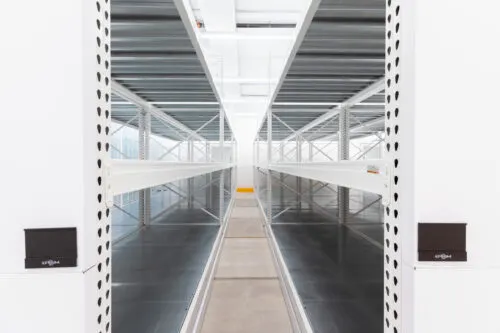
- Visibility is clear, with no deep shelves hiding items
- Motion is minimal, with everything within reach
- Picking is one-touch, grab and go, no hunting
- Layout naturally supports item size, with small up front and bulky in back
That is what a good warehouse layout design does. It reduces decisions, reduces steps, and makes the fastest items the easiest items.
Step 1: Map velocity before you touch the shelves
If you want better warehouse layout design, start by knowing what actually moves.
Break your SKUs into velocity tiers:
- Tier 1: daily or multiple times per week
- Tier 2: weekly
- Tier 3: monthly or less
Do not store only by category. Store by velocity. Your layout should reflect how fast items move, not how you label them in a spreadsheet.
Step 2: Design a picking path that is a loop, not a maze
A picking-first warehouse layout design mirrors real daily movement.
A practical path looks like this:
- Entrance zone: returns and damaged items go here, separated from active stock
- Fast-mover zone: the front section where Tier 1 items live at waist-to-eye height
- Standard zone: the middle section for Tier 2 items
- Bulk and slow-mover zone: the back section for Tier 3 items and bulky stock
- Packing and QC near the exit to minimize cart travel
Pickers should not zigzag. They should move in one direction, grab what they need, and get out. That is efficient warehouse layout design.
Step 3: Make everything visible
Visibility is a layout feature. If a picker has to guess, your warehouse layout design failed.
Practical visibility moves:
- Keep stock front-facing, no digging to the back of deep shelves
- Use clear labeling with SKU, quantity, and minimum or reorder point
- Use visual bins so you can see contents quickly
- Set height limits so you can see what is stored and access it safely
- Use aisle markers so the room can be navigated without asking someone
In most stockrooms, improved visibility alone reduces searching dramatically.
 Step 4: Add flexibility so the layout can evolve
Fixed shelving works only if your inventory mix never changes. It will change.
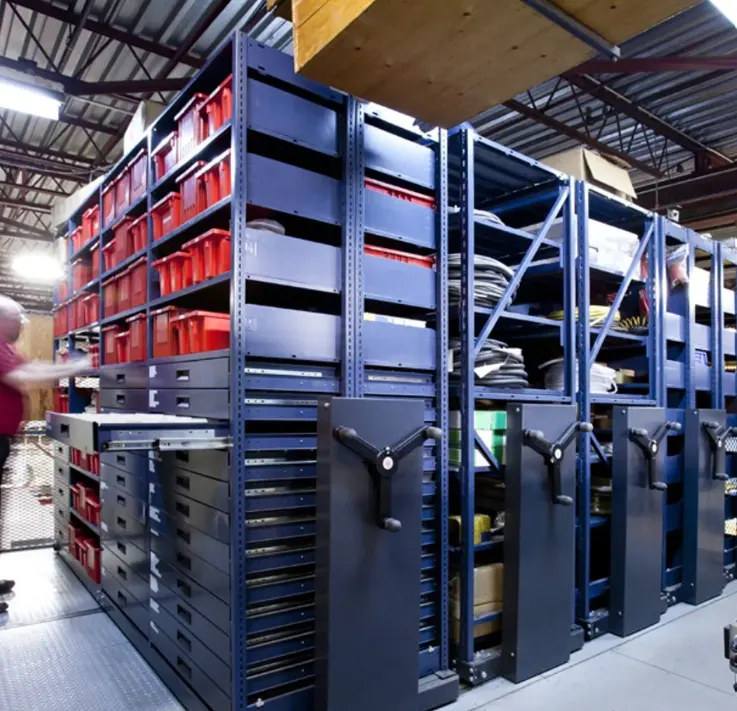
That is why flexible systems matter in warehouse layout design. High-density mobile shelving and modular systems allow you to:
- Shift zones as velocity patterns change seasonally
- Compress or expand aisles as inventory grows
- Create temporary fast-pick areas for promotions or seasonal surges
Static layout creates annual redesign work. Flexible layout allows change without disruption.
Step 5: Measure what matters
A layout change is only successful if it changes performance.
After you update warehouse layout design, track:
- Pick time per order, especially for fast movers
- Stockout rate, meaning how often an item is requested but not found in time
- Inventory accuracy, system count versus physical reality
- Restock frequency for fast movers, which should become predictable
If these metrics improve, the layout is working.
A simple example of what good warehouse layout design can change
A common pattern in stockrooms is that a small portion of SKUs drive a large portion of picks. When Tier 1 items are moved to the front, Tier 2 stays central, and Tier 3 is pushed to the back and higher storage, searching time drops. Adding clear labels and visual bins reduces “I cannot find it” moments, and using flexible storage in slow-mover zones saves floor space without slowing picks.
Same inventory. Better layout. Massive efficiency gain.
Design for speed, not only capacity
Many warehouses optimize for maximum storage density. It is backwards for a stockroom.
Optimize your warehouse layout design for speed and the rest follows:
- Faster picks reduce labor cost
- Fewer stockouts improve fill rate
- Better visibility improves inventory control
- Faster replenishment keeps shelves stocked and reduces disruption
Speed beats density in a stockroom because labor and service levels are the real constraint.
Make your stockroom run like a checkout lane
The checkout lane model works because it is built for flow. Your stockroom should be too.
If you want to reduce walking, cut searching time, and improve replenishment, start with velocity zoning, a clean pick path, and a layout that makes fast movers the easiest items to access.
Book a warehouse layout design and stockroom optimization review. We can analyze your velocity data, design a picking-first layout, and help you build a space that supports speed, visibility, and replenishment without constant rework.